The following is a summary of the judicial record for Judge Lilly-Spells. Before taking the bench, she spent over a decade with the Clark County Public Defender’s Office, rising to chief deputy public defender. That background shapes how she runs Clark County District Court Department 23 today. Ahead of the Lilly-Spells 2026 election, it’s worth understanding her background and approach to justice.
Anyone researching Judge Jasmin Lilly-Spells judge record will find a venerable work ethic that goes back well before she took the bench.
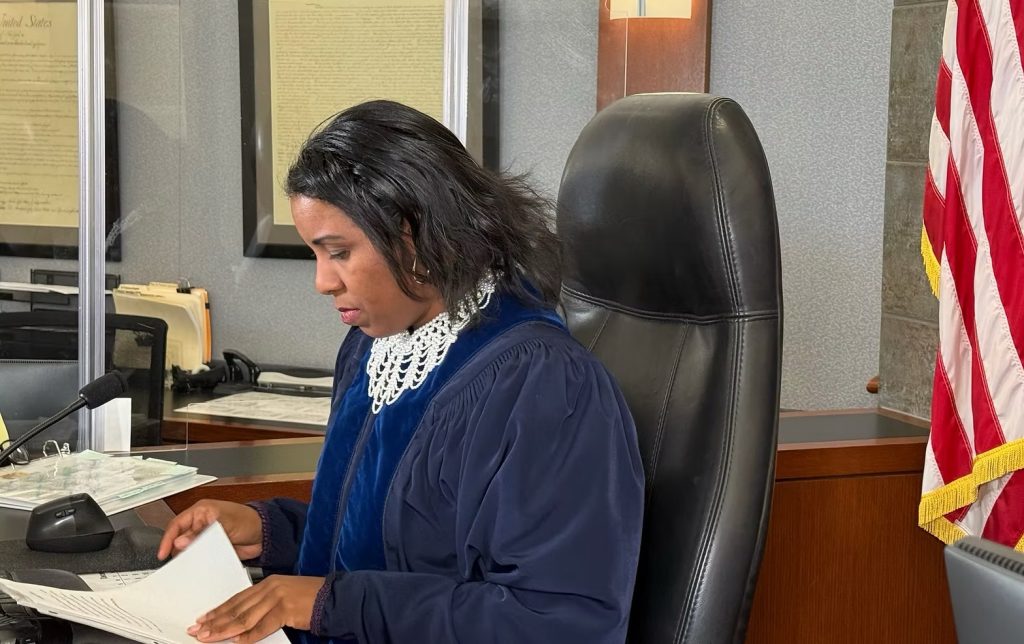
Courtroom Focus and Expectations
Las Vegas Eight Judicial Court Department 23, runs a split docket. It hears both civil and criminal matters on a fixed weekly schedule. Civil cases fall on Tuesdays, criminal cases on Mondays and Wednesdays, and routine matters get their own dedicated day. This structure is intentional and reflects how Judge Lilly-Spells’ Nevada courtroom operations are organized to keep cases moving without sacrificing thoroughness.
Efficiency in the Judicial Record for Judge Lilly-Spells
Department 23 is a fully electronic court, and proposed orders are due to chambers within 14 days of a ruling. Routine civil matters get resolved through the chambers’ calendar rather than clogging the regular motion docket. Attorneys who need extended argument time can request a special setting, so as not to derail an already packed calendar.
While none of this is flashy, it’s the kind of discipline that keeps a courtroom from falling behind and a reflection of the efficiency Judge Jasmin Lilly-Spells has achieved.
Respect and Clarity for Litigants
Courtroom rules in Department 23 demand a great deal from attorneys and give something back to everyone else. Counsel are expected to stay civil with each other, avoid disparaging remarks, and never argue in front of a jury. Oral objections aren’t allowed; instead, attorneys state their objections to the bench, so the jury isn’t unfairly influenced by theatrics.
While the court has stringent rules, it also shows compassion and respect for everyone that contributes to its work. For example, parties can appear remotely for non-substantive matters, which matters for anyone juggling work, childcare, or a long commute to the Regional Justice Center. Furthermore, the dress code is flexible, so litigants aren’t penalized for not owning a suit.
Key Decisions in the Judicial Record for Judge Lilly-Spells
Department 23’s docket spans a wide range of matters, including negligence claims, premises liability suits, auto accident cases, collection actions, and criminal proceedings. That breadth is itself part of the judicial record for Judge Lilly-Spells worth noting. Handling that volume, across both civil and criminal law, requires a strong working knowledge of procedure that not every judge develops.
Case filings are public record, and voters interested in a specific matter can look up how it moved through the court on the county’s system.
- Statistics for Judge Lilly-Spells’ cases can be found here.
- Details on her decisions can be found on Trellis (subscription required).
Note that there are limits to what this section can and can’t show. A docket lists what’s been filed and who’s presiding, not a curated highlight reel of outcomes. The judicial record for Judge Lilly-Spells shows remarkable consistency. Cases are handled on schedule, procedures are followed, and both sides are given a fair hearing. This happens week after week, across thousands of filings.
Four Core Judicial Commitments
Four commitments show up again and again in how Judge Lilly-Spells describes her approach to the bench, and they’re the throughline of the judicial record for Judge Lilly-Spells that this campaign points to most often:
- Compassion: treating every person who enters her courtroom with dignity regardless of which side of a case they’re on
- Integrity: upholding the rule of law honestly and without favoritism
- Accountability: making sure outcomes are fair and that decisions hold up to scrutiny
- Public Safety: weighing decisions against their effect on the broader community.
None of these commitments work in isolation. A courtroom that’s efficient but unfair isn’t accountable, and one that’s compassionate but careless with public safety isn’t doing its job either.
Specialty Courts in the Judicial Record for Judge Lilly-Spells
Judge Lilly-Spells previously oversaw Department 23 Veteran’s Treatment Court. Specialty courts like this one exist because standard sentencing doesn’t always address what’s actually driving a case, and veterans facing legal trouble often need a different kind of intervention than a standard criminal docket provides. She currently serves on the judicial education committee, work that shapes how judges across the county are trained, not just how her own courtroom runs.
Ensuring Access to Justice
Long before she was on the bench, Jasmin Lilly-Spells Clark County work included volunteering as a Court Appointed Special Advocate for abused and neglected children, mediating disputes at the Neighborhood Justice Center, and handling pro bono cases through Nevada Legal Services. That history carries into how her courtroom runs now. Remote appearances for non-substantive hearings, a dress code that doesn’t shut out litigants who can’t afford business attire, and clear procedures posted publicly all point toward the same goal: making sure people can actually participate in their own cases, not just watch from the sidelines.
Access to justice isn’t just a phrase for a campaign page. It shows up in small, practical decisions, like allowing telephone conferences for scheduling issues instead of requiring an in-person appearance for every minor matter, or making courtroom protocols and calendars publicly available online rather than leaving them to guesswork. Taken together, these choices are part of the same judicial record for Judge Lilly-Spells that voters are being asked to evaluate this election cycle.